Downstream · Solutions & products
Refined products & derivatives
Fuels, LPG, lubricants, bitumen: a complete range, from the modular mini-refineries to the pump — every product refined and distributed in-country.
Browse this page · 2 topics
Products & prices · Product
A range built to international standards.
Target products from our modular mini-refineries (planned): diesel to EN 590, petrol to NF EN 228, LPG to approved commercial specifications, checked batch by batch by an independent third party and distributed across the whole network from commercial launch. Retail prices approved byARSAT (the Downstream Petroleum Sector Regulatory Authority), identical across the whole territory — indicative prices below, subject to the regulator’s revisions.
The problem · our answer
Repeated fuel shortages, under-sized national refining.
The Djermaya refinery does not cover domestic demand, and import dependence exposes the country to shortages. EnerTchad’s answer: process more on site — 24/7 modular mini-refineries, autonomy depots and anti-shortage Mobile Stations™ — to secure Chad’s supply.
The opportunity · Add value here, sell here
The market is already there — today it is served by imports.
Every imported litre of fuel is a litre that local processing can produce and sell. Demand is captive and growing — and today the downstream margin leaves the country with the crude.
Fuels, LPG, lubricants, bitumens: almost everything is imported today. Producing locally means substituting imports — a market already paid for, already measured.
With it go the margins of refining, distribution and petrochemicals. Every point of local processing gained is a margin repatriated.
Substituting wood fuel: millions of households to equip with deposit bottles — a massive, durable, expanding social market.
Northern Cameroon, CAR, eastern Niger: landlocked neighbours importing from far away at high cost. Export finished products — not crude — to the sub-region.
Selling a finished product where a raw barrel is sold today: Chad’s greatest economic opportunity — and our reason for being.
HOUSEHOLDS · B2C
Retail, at the pump
For motorists and households: fuels and LPG at the regulated price, across the national station network and mobile stations, everywhere in Chad.
- Petrol, diesel, kerosene, deposit-bottle LPG — quick exchange at a station or Mobile Station™
- Inclusive multi-channel: USSD (balance, stations, prices) & LPG orders via Back to top
- LPG subscription — scheduled bottle exchange at home
- Prepaid fuel wallet, top-up and transferable by mobile money
- Single regulated price, payment at the pump
- Hub-station network + locator app
PROFESSIONALS · B2B
In volume, delivered on site
For industry, mining, transporters and institutions: bulk supply, framework contracts and dedicated delivery — with a dedicated B2B depot (planned) for bulk loading.
- Diesel, multi-grade petrol, LPG, lubricants, bitumen
- Framework contract, per-litre pricing, tanker delivery
- Dedicated B2B depot (planned) · on-site mobile stations
- Tank telemetry — IoT sensors, automatic replenishment below threshold (VMI)
- ERP integration & e-invoicing — your transactions in your own system, via API
- CO₂ reporting per fleet and cost centre, ready for your ESG reports
Industrial & B2B range
Beyond the pump: industry and construction.
Road and machinery diesel (construction, mines, generators — EN 590, cetane ≥ 51, sulphur ≤ 50 ppm); unleaded petrol (RON 95); kerosene; Jet A-1 for aviation refuelling — to ARSAT-approved specifications.
Motor oils (5W-30, 15W-40), transmission oils (SAE 80W-90), industrial greases and hydraulic fluids. API SN/CF standard.
For industrial boilers, power generation and heavy industrial uses. Controlled sulphur content. Sector volume: ~40,000 t/yr (national refining).
Road bitumens (EN 12591 standard, grades 60/70 · 80/100), hot and cold asphalt mixes, PMB binders for Chad’s infrastructure and construction sites.
Local bitumen · opening up the country
Roads at Chad’s price, not the import price.
Chadian crude is a heavy, low-sulphur crude: it naturally carries the heavy fractions from which road binders are drawn (bitumens 60/70 · 80/100). Yet today, every tonne of asphalt is imported — hauled more than 1,700 km from the coast, in foreign currency — which makes the kilometre of paved road exorbitant for the State and the taxpayer. EnerTchad’s target: produce that binder here, from our own crude, so that paving the territory stops being a luxury — and becomes a lever for opening up the country.
The heavy fractions of Doba/Bongor crude are the basis of road binders — the resource is under our feet.
Imported asphalt = more than 1,700 km of logistics and foreign currency: a cost line that weighs down every road project.
Linking farming basins, towns and markets: substituting imports means more paved kilometres for the same budget.
Read the field note: “The road in black: bitumen, the barrel’s other product” →
Company in formation — local bitumen production certification targeted within the modular mini-refinery; a target subject to permits, studies and financing.
Cost of living · the price that sets all prices
Fuel weighs on every household’s basket.
When fuel is expensive or scarce, everything gets dearer: transport, the market, the mill, the water pump, the taxi. In a landlocked country, every supply disruption immediately hits the price of a sack of millet as much as a transport fare. Producing and distributing locally, at the regulated price everywhere, strikes at one root of the high cost of living.
A dearer litre makes transport dearer, then food and everyday goods — the bill travels up to the consumer.
The pump price is set by the State (ARSAT); our role is to apply it identically everywhere — town or remote area — with no local overcharging.
Local refining, hub-depots and mobile stations aim to reduce shortages and queues — supply stability protects purchasing power.
EnerTchad does not set prices: they belong to the State. Our contribution, as an operator, is the faithful application of the regulated price and the regularity of supply — targets, company in formation.
Add value to every fraction of the barrel.
Nothing is lost: from the heavy fractions (bitumens, fuel oil, lubricants) to the light ones (LPG, petrols, naphtha for plastics), through associated gas (fertiliser, methanol, electricity) — every cut has a local outlet. Petrochemicals is also the only segment of global oil demand set to keep growing durably. By processing Chadian crude and gas here rather than importing finished products, EnerTchad aims to substitute imports, create skilled jobs and durably anchor value in the country.
Associated gas · the lost flame
Stop burning what could light and feed.
On the fields, part of the gas associated with oil is flared — burnt away for nothing — while the country lacks electricity and imports its fertiliser. The same molecule, captured rather than burnt, can run generators and feed urea production. EnerTchad’s target: turn that flame into kilowatts and bags of fertiliser, instead of letting it rise into the sky.
Flared associated gas: a lost resource and CO₂ emitted for nothing.
On-site gas-to-power: current for operations and, in time, neighbouring communities.
Gas-to-urea: inputs produced in-country to support food security — fewer imports.
End of routine flaring and gas valorisation: targeted over the horizon, company in formation — subject to permits, studies and financing.
Ripple effect · Refining & Distribution ecosystem
Each product gives birth to an industrial chain.
EnerTchad does not just sell products: by supplying the raw material locally, EnerTchad triggers the creation of Chadian SMEs and industries downstream. A multiplier effect on jobs and the national industrial fabric.
Asphalt plants, public-works companies, surfacing — serving the opening up of Chad’s road network.
Pipes, cans, agricultural films, packaging: a processing chain for regional markets.
Ammonia and urea from gas: a direct lever for national agricultural and food security.
Cooking gas bottled and distributed: a massive social market that eases pressure on wood fuel.
Oils and greases for mining, transport and agriculture — a high-value regional market.
Associated gas converted into electricity: a direct answer to the country’s energy deficit.
Buying made simple
Fuel, without complications.
Whether you are a motorist or a professional, buying from EnerTchad should be simple, fast and transparent. No pointless paperwork: an identical regulated price everywhere, and a clear path for your need.
- 1Find the nearest station with the right fuel via the app (coming soon) or the hub-station network and mobile stations.
- 2Fill up — petrol, diesel, LPG — at the national regulated price, identical across the whole territory.
- 3Pay on the spot and go. Coming soon: mobile payment and a loyalty programme.
- 1Fill in the online request: product, volume and delivery location — under 2 minutes.
- 2Receive a clear offer (framework contract, per-litre price, terms) within three business days.
- 3On-site delivery — including by tanker truck or mobile station in remote areas.
Regulatory framework · Refining & Distribution compliance
A compliant, responsible downstream operator.
Petroleum product distribution in Chad is a regulated sector. EnerTchad operates in strict compliance with the national framework and relies on the country’s strategic infrastructure.
Pump prices are set by the Downstream Petroleum Sector Regulatory Authority (ARSAT) and applied identically across the whole network — in town as in rural areas, with no local overcharging.
Coordination with the Chadian Petroleum Depots Company (STDP) for national strategic storage, complemented by the regional hub-depots we are targeting, to secure local supply.
Sales exclusively through licensed structures, against the cross-border smuggling that threatens the market. Standards-compliant tanks, traceability and fire safety at every point of sale.
Our difference
Where the conventional network stops, we keep going.
Established distributors cover the main roads. But recurring shortages in the provinces — Moussoro, Barh El Gazel, the eastern areas — show the limits of the fixed model. Our answer: a hybrid network designed for resilience.
Deployment in 24-48 h wherever a station runs dry or does not exist — resilience the fixed network cannot offer.
NRJ+™ card, Mon Espace app, real-time dashboard, EV charging: a digital experience no local player matches today.
Margins and jobs that stay in-country — 80% Chadian staff, local content maximised across the whole downstream chain.
Specialised segment
Aviation · Jet A-1. Airport refuelling and supply for humanitarian bases and air operations — a high-value segment, demanding in quality and HSE, on which EnerTchad is positioning itself (N’Djamena and regional airfields).
Lubricants · packaging
Motor oils, from can to drum.
Targeted lubricant range (Diesel & Petrol), packaged for retail and B2B alike. (target range · company in formation)
For motorists and small workshops — Diesel & Petrol.
Metal can for intensive use and durable storage.
For fleets, industry and worksites — on-site delivery.
Two families of motor oils, from small can to drum.
Refining & Distribution · Local refining
The mini-refinery: where our products come from.
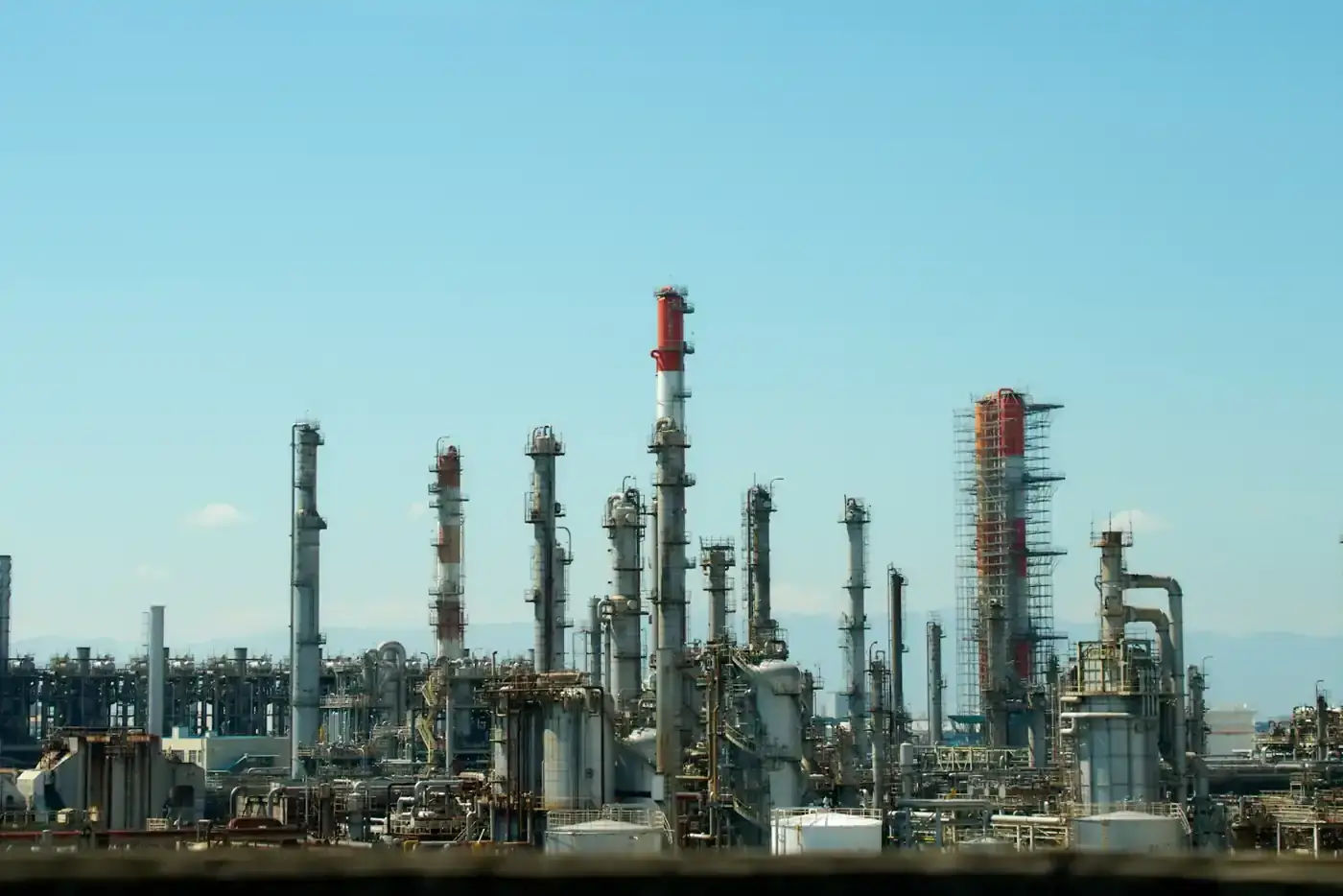
Our fuels do not come down from a distant mega-refinery: they come out of modular units deployed as close as possible to the fields. Here is the tool that makes local refining possible.
Modular & removable mini-refinery
Modular mini-refinery — 500–2,000 b/d trains, skid-mounted, redeployable as demand shifts.
Our trump card for reaching our objectives: a refinery that is modern, modular, removable and small-scale, designed in Chad for our realities. Standardised 500–2,000 b/d trains, prefabricated, 100% catalogue parts; maintenance by module exchange in under 24 h. Where a mega-refinery is rigid and out of reach, our unit deploys, redeploys and upgrades crude as close as possible to the satellite blocks — a mobile asset, never stranded.
Product partnerships · targeted quality
Quality through partnership
Fuels, lubricants and bitumens: EnerTchad will build its product ranges with proven technical partners, for reliable, traceable quality with every delivery.
Targeted partnerships · company in formation — not signed agreements at this stage.
Continue in Refining & Distribution
Specifications
The range in figures, product by product.
Target specifications, checked batch by batch by an independent third party and sold at the ARSAT price. For a tender file or your quality department, the Refining & Distribution technical sheet (PDF, 2 pages, in French) reproduces this table together with the purchase channels.
| Product | Standard / target grade | Key specification | Use |
|---|---|---|---|
| Diesel | EN 590 | Cetane ≥ 51 · sulphur ≤ 50 ppm | Transport, power generators |
| Petrol RON 95 | EN 228 | Octane rating RON 95 | Cars & two-wheelers |
| Lamp kerosene | Lighting grade | Low sulphur content | Lighting & household uses |
| Jet A-1 | DEF STAN 91-091 | Freezing point ≤ −47 °C | Aviation |
| LPG | Commercial specs | Approved butane/propane blend | Household & industrial cooking gas |
| Bitumen | 60/70 · 80/100 | Road penetration grades | Surfacing & public works |
| EnerLub™ lubricants | API / SAE | Motor oils, from can to drum | Automotive & industry |
Indicative target specifications, without contractual value; confirmed at contract. Certificate of conformity for each batch available on request.
Two ways to buy, one regulated price.
Refined products reach buyers through two channels — retail at the pump, or volume delivered on site — always at the ARSAT price. Here is how a B2B order works.
Pick the product & volume
Choose from the range and estimate your volume: fleet fuels, industrial LPG, bitumen for a road project or aviation Jet A-1.
Request a quote
Through the online store or by email (subject “Industrial / Buyer”): no online payment, a quote at the ARSAT price and an adviser gets back to you.
Delivery or pump
Volume delivered on site under a framework order, or retail through the Tchadium network and Mobile Stations™.
Traceability
Each batch is identified and its conformity certificate available — the numbers to attach to a tender.