Downstream · Special products
Lubricants, bitumen & special products
Fuel is a volume product at a regulated price. Lubricants, bitumen and solvents are the opposite: lower volumes, higher value, a free price, a technicality that builds loyalty. They are the products that make engines last and roads hold — and give Refining & Distribution its margin.
Lubricants: the oil that makes things last
A lubricant is a base oil — from refining or synthesis — plus additives that give it its properties: stable viscosity when hot, detergency, wear protection. Engines, gearboxes, hydraulics, transformers, compressors: every machine has its oil. The Chadian market is today entirely imported; a local blending plant, fed with imported base oils, is the first realistic step towards a Chadian lubricant.
Bitumen: the road in black
Bitumen is the heaviest residue of crude distillation. Heated, mixed with aggregates, it makes the asphalt of roads. Doba’s heavy crudes are naturally rich in it: a country that builds roads and produces heavy crude has every reason to make its own bitumen. The chain needs heated storage, insulated tanker transport and penetration and viscosity control at every delivery.
Solvents and special products
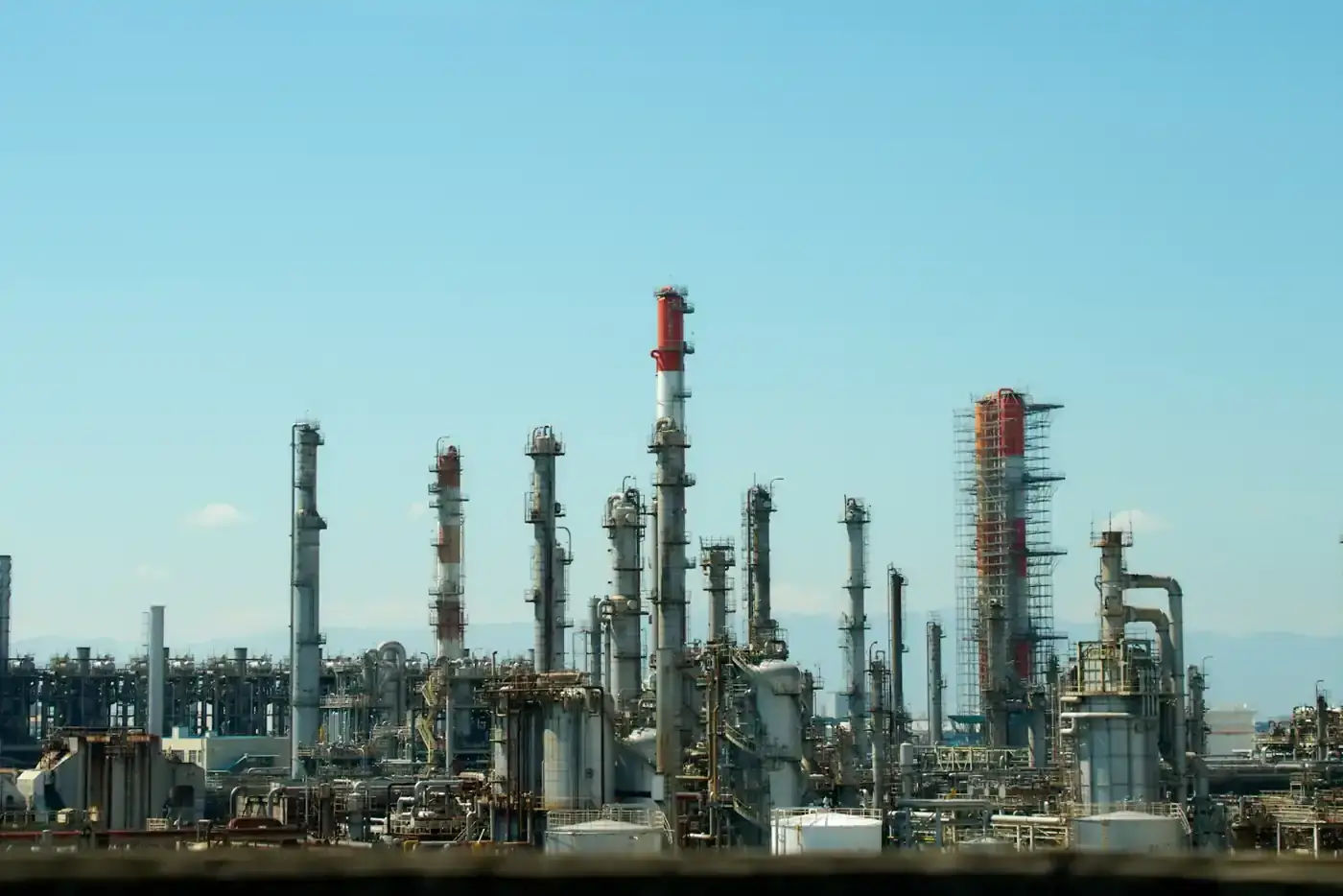
White spirit, technical kerosene, thinners for paint and industry: light fractions the mini-refinery can isolate, with buyers among manufacturers, painters and printers. Small volumes, high margins, purity requirements.
What we put in place
Imported base oils, additives, local formulation: the first step of a Chadian lubricant.
Valorise our crude’s heavy residue for the country’s roads, with the heated storage it requires.
Viscosity, penetration, flash point: every batch checked before delivery.
Fleets, mines, construction, electrical transformers: contracts and on-site delivery.
Benchmarks
| Product | Origin | Customers |
|---|---|---|
| Engine and industrial oils | local blending of imported base oils | fleets, industry, mines |
| Road bitumen | heavy refining residue | construction, local authorities |
| Solvents | light fractions | industry, paint |
Segments targeted at commercial opening; the company is being incorporated.
Read next
Continue in Refining & Distribution
From the depot to the pump: the journey in six steps
Every litre sold follows the same controlled path — and every step has its indicator: service rate, cost per kilometre-litre, batch compliance. The modular mini-refinery is a dated target, not a day-one capability: at launch the molecule enters through regional import into three storage hubs — N’Djamena, Moundou, Abéché — and is produced in-country as local refining ramps up.
Sourcing to specification
Controlled import today, local production targeted tomorrow: every batch comes in with its certificate of conformity.
Depot & storage
Reception, custody metering, regional buffer stock: the depot absorbs the shocks of the supply corridor.
Planned transport
Optimised rounds, a dedicated tanker fleet, telematics and road-safety rules: deliver the right volume, on time, without incident.
Point of sale
Tchadium stations, Mobile Stations™, approved resellers and business delivery: six routes to the customer, one standard.
Quality & traceability
Batches tracked to the pump, unannounced checks, specifications on display: trust is measured, not declared.
Service & loyalty
Shop, local services, business offers and a loyalty programme (target): the station becomes a place of life, not just a stop.
Quality · Proof
A fair litre is not declared: it is proven.
The chain of proof built from field to depot — numbered seals, weighbridge checks and contradictory dipping (logistics), certificate of analysis for every batch (refining) — ends at the station. Here is the last link.
At every station delivery, a sealed, numbered sample is kept. If a litre is ever questioned, we compare against the depot batch — not against memories. It extends the corridor custody chain all the way to the pump.
Pumps gauged and calibrated at a set frequency, with a dated metrology certificate displayed in the station. Customers do not take our word for it: they check. The fair litre is a commitment of scales, not of communication.
Every batch enters with its certificate of analysis; molecular fuel marking targeted, in support of national anti-adulteration programmes, as run by East African regulators. Adulteration and the parallel market are fought in the laboratory.
Target protocols · company in formation — the custody chain and per-batch CoAs are described on the logistics and refining pages.
LPG · Safety
The bottle against the axe — safely.
Gas only replaces wood fuel if every cylinder inspires trust. The Tchadium deposit system comes with a controlled life cycle and simple habits at home.
Periodic pressure testing and requalification targeted for the deposit fleet, valve check at every pass through the centre, withdrawal of aged or corroded cylinders. A cylinder that circulates is a cylinder that is inspected.
Cylinder weighed in front of the customer (tare and fill legible), new seal, leak check before hand-over. A Tchadium exchange point is not a swap: it is a controlled act.
Compliant 28-30 mbar regulator, soapy-water test at the slightest doubt, cylinder upright and ventilated — and never a flame to look for a leak. Simple habits, repeated at every point of sale.
Target protocols · company in formation — NF EN 589 targeted; 6 and 12.5 kg formats detailed in the shop.